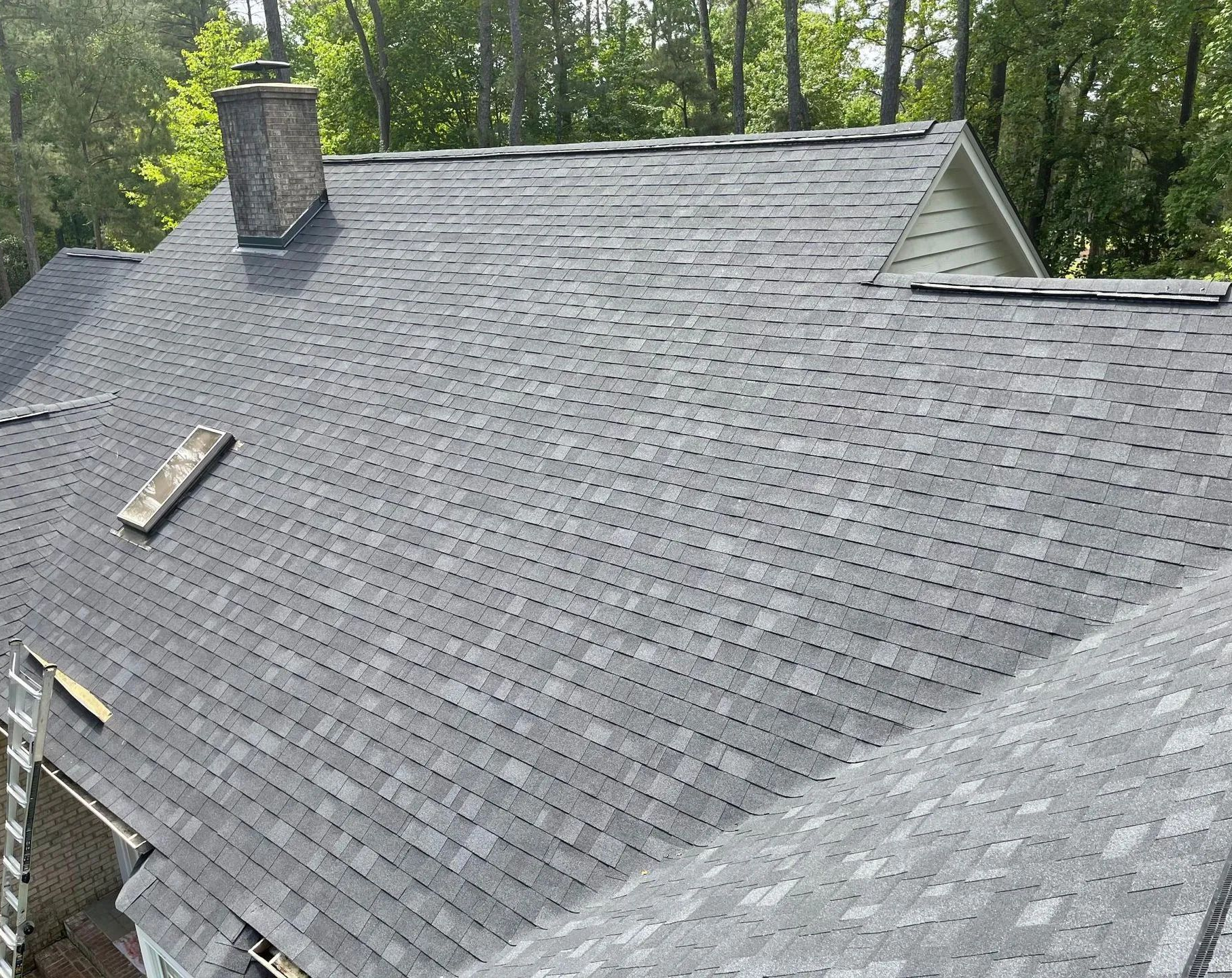
Common Roofing Problems Homeowners Face in Raeford, NC
Quick Answer: Raeford homeowners most often deal with storm and wind damage, leaks at flashing and roof penetrations, heat and granule wear on shingles, algae and moss from humidity, pine needles and debris trapped in valleys and gutters, and attic ventilation problems that age the roof from below. Most of these start small and give early warnings, such as stains on the ceiling, granules in the gutters, lifted shingle edges, or an attic that stays hot and damp. Catching them early usually means a limited repair, while ignoring them lets moisture reach the deck and the rooms below.
It is a Tuesday in late July, and the sky over Hoke County goes from bright to dark gray in about ten minutes. The rain comes down hard enough that you can barely see the neighbor's pines, and then it stops just as suddenly, leaving steam rising off the pavement. An hour later you notice a faint damp smell near the hallway closet. Nothing is dripping yet. But you know that smell, and you know the roof is somewhere above it.
Roofs in the Sandhills live a harder life than most people realize. Summer heat bakes them, afternoon storms soak them, tropical systems push wind and rain inland, and the pines overhead drop needles and pollen on them year round. The problems that result are not mysterious, and they tend to show up in a predictable order. Here are the ones Raeford homeowners run into most, what causes each, and what to watch for before a small issue becomes a big one.
Storm and Wind Damage
Central North Carolina sees strong thunderstorms through the summer and the occasional tropical storm or hurricane remnant that reaches well inland. Raeford sits about 20 miles from Fayetteville, far from the coast, but wind and heavy rain still arrive with those systems.
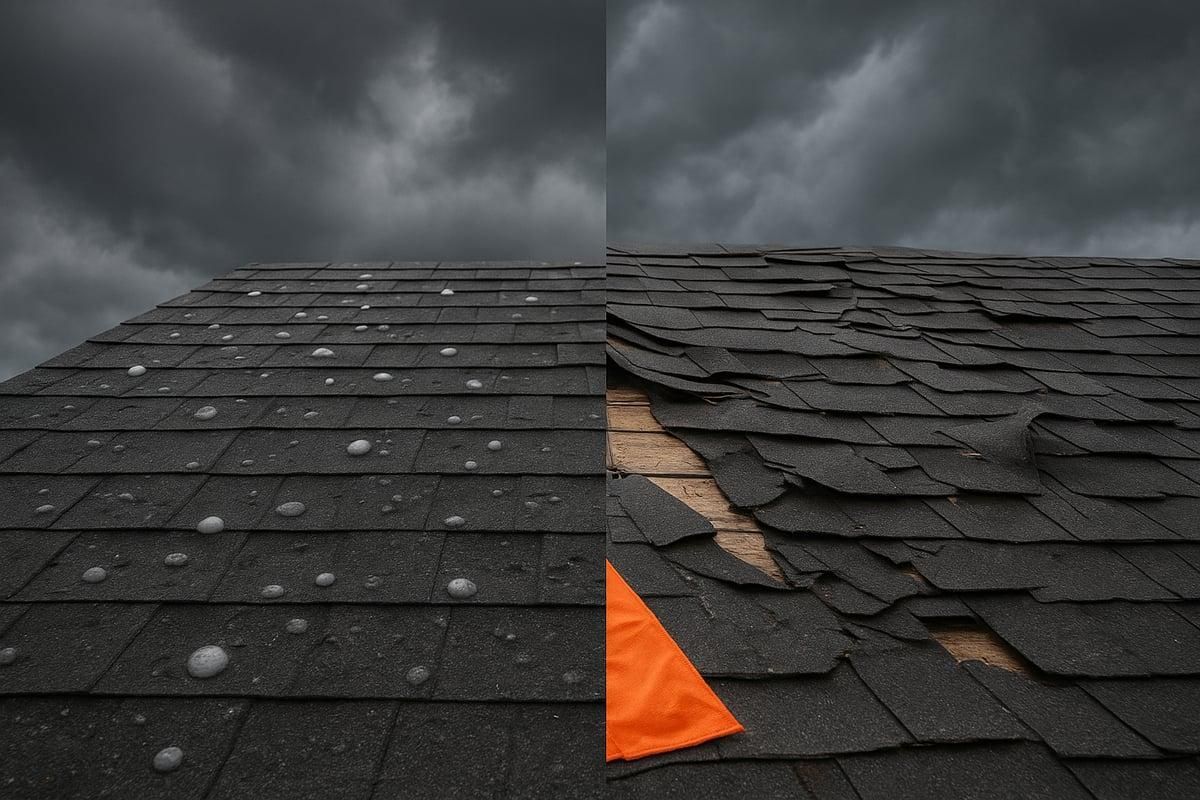
Wind works on a roof by getting under shingle edges and pulling upward. It can break the adhesive seal that holds tabs down, crease shingles so they cannot lie flat again, tear pieces away entirely, or bend the metal flashing at chimneys and vents. Falling limbs add punctures and scrapes.
The tricky part is that this damage is not always obvious. A creased or unsealed shingle can look normal from the driveway and then fail in the next storm. After any strong blow, walk the yard and look for shingle pieces, then scan each slope with binoculars for bare spots, crooked rows, or tabs that sit higher than their neighbors. If you see anything, have it looked at promptly, because the next round of wind will find the weak spot.
Leaks Around Flashing and Roof Penetrations
If you ask roofers where leaks start, many will point to the same places: the metal flashing around chimneys, the rubber boots around plumbing vents, the joints where a roof meets a wall, and the valleys where two slopes come together. These are the spots where the roof has to be sealed around something rather than simply shed water downhill.
Flashing fails for a few reasons. Metal expands and contracts through hot days and cool nights, and over time the seams open. Sealant dries out and cracks under the sun. Rubber pipe boots split from heat and age. And wind driven rain, which is common here, pushes water sideways into joints that would stay dry in a gentle rain.
The warning signs show up inside the house before they show up outside. Look for a brownish ring on a ceiling near a chimney, vent, or exterior wall, paint that bubbles or peels, and drips that appear only during heavy storms. Because the water often travels along rafters before it drops, the stain may sit several feet from the actual entry point, which is one reason guessing at the source rarely works.
Heat Wear and Granule Loss on Shingles
Raeford summers are long. July highs in Hoke County average close to 90 degrees, and a dark shingle on a sun facing slope gets considerably hotter than the air around it. That heat is hard on asphalt shingles.
Over the years it dries out the asphalt, and the mineral granules that protect the surface start to wash away. You may notice gritty, dark material collecting in the gutters or at the base of the downspouts. The shingles themselves may curl at the edges, crack, or develop shiny bare patches. Once the granules are gone, ultraviolet light attacks the asphalt directly and the aging speeds up.
This is a gradual problem, so the best defense is regular attention. Look at the roof from the ground each spring and fall, check the gutters for granule buildup, and pay extra attention to the south and west slopes, which usually take the most sun and wear out first.
Tip: Granules in the gutters after a storm are worth a second look. A small amount is normal on a young roof, but a steady, growing pile on an older roof is a sign the shingle surface is wearing thin.
Algae, Moss, and Humidity
The same humidity that makes a Carolina summer feel heavy also feeds growth on the roof. Dark streaks that run down shingles, especially on shaded slopes, are usually algae. On their own they are mostly a cosmetic issue, though they do absorb heat and can make a roof look older than it is.
Moss is a bigger concern. It forms thick, spongy mats that hold water against the shingles and creep under their edges, lifting them and giving moisture a path underneath. Roofs shaded by large trees, or sections that stay damp because debris is sitting on them, are the most likely to grow it.
Do not scrub a roof with a stiff brush or a pressure washer to remove growth. That strips granules and can force water under the shingles. A roofer can recommend a gentle approach that cleans the surface without harming it, and can tell you whether the growth is hiding wear underneath.
Pine Needles and Debris in Valleys and Gutters
Pines are part of what makes the Sandhills what they are, and they are also constant roof litter. Needles do not break down quickly, and they pack tightly into valleys, behind chimneys, and along the lower edges of the roof. Spring pollen mixes in and turns the pile into a damp mat.
Debris like this causes trouble in two ways. First, it slows or blocks the flow of water. A valley that is meant to carry runoff off the roof can back up, and water can find its way under shingles. Second, the pile stays wet, which encourages rot, moss, and wear on the surface beneath it.
Gutters feel the same pressure. When they clog, water spills over the edge or backs up under the first row of shingles. Over time that can rot the fascia board and the roof edge. If your gutters are shaded by pines, plan on cleaning them more often than a typical twice a year schedule, and clear any debris from valleys and behind chimneys when you do.
Attic Ventilation and Moisture Problems
Some of the most damaging roof problems begin in the attic. A roof needs air moving through the space under it to carry off heat and moisture. When ventilation is poor, summer heat can build up in the attic and bake the shingles from below, shortening their life. Humid air, in turn, condenses on cooler surfaces, leaving damp insulation, mold on the deck, and a musty smell.
Signs of a ventilation problem include an attic that feels stifling in summer, damp or compressed insulation, dark patches on the underside of the roof deck, rusted nails, and upstairs rooms that stay noticeably warmer than the rest of the house. Blocked soffit vents are a common cause, especially when insulation or debris covers them.
Because the effects build slowly, this problem is easy to overlook. If your roof is aging faster than it should, or if you smell dampness in the attic, ventilation is worth checking alongside the shingles.
Soft Spots, Sagging, and Standing Water
A roof should be flat in the sense that its planes look even and straight. If you see a dip, a sag, or a wavy line along the ridge, that usually means something below the shingles has weakened. Long term moisture can soften the deck, and in serious cases it can affect the framing.
Flat and low slope sections, such as those over porches, additions, or garages, have their own issue. Water that sits on them instead of draining away stresses the membrane and finds any weak seam. Ponding after a rain, bubbling in the surface, and stains on the ceiling beneath all point to a drainage or membrane problem.
Warning: A sagging roofline or a ceiling that bows downward is a sign of possible structural trouble. Stay out of the area, do not walk on the roof, and have a professional take a look as soon as you can.
Why Small Roof Problems Get Bigger Here
None of these problems is unusual, but the Sandhills climate has a way of compounding them. Heat opens up small cracks. Sudden downpours drive water into them. Humidity keeps everything damp for days afterward. A worn seal that would barely matter in a dry climate becomes a slow leak, and the slow leak soaks the deck, and the soft deck holds moisture longer. By the time a stain appears on the ceiling, the roof may have been taking on water for a season or more.
That is the case for regular, simple habits. Look at your roof from the ground twice a year. Clean the gutters. Keep debris out of valleys. Check the attic after heavy storms. And when you see something that does not look right, get it examined before the next weather system arrives.
Frequently Asked Questions
What is the most common roofing problem in Raeford, NC?
Storm related damage and leaks around flashing and roof penetrations are the most frequent issues. Strong summer thunderstorms and tropical systems stress shingles and seals, and the joints around chimneys and vents are the usual weak points.
Why do roofs in the Sandhills age faster?
Long, hot summers dry out asphalt shingles, humidity feeds algae and moss, and pine needles hold moisture against the roof. Frequent heavy rain and the occasional tropical storm add more stress.
Are dark streaks on my roof a serious problem?
Usually they are algae, which is mostly cosmetic. Moss is more serious because it holds water and lifts shingle edges. Have a roofer check the area before you clean it, since harsh scrubbing can damage the shingles.
How often should I clean pine needles off my roof and out of my gutters?
If pines overhang your home, check the gutters and valleys several times a year, and always after heavy storms. Needles pack tightly and hold water, so they should not be left in place.
How can I tell if my attic has a ventilation problem?
An attic that feels extremely hot in summer, damp insulation, a musty smell, and dark patches on the underside of the deck are common signs. Upstairs rooms that run much warmer than the rest of the house can point to it too.
Should I check my roof after every storm?
A quick look from the ground is a good habit after any strong storm. Check the yard for shingle pieces, scan the slopes with binoculars, and look at ceilings and the attic for new stains or dampness.
Early Attention Keeps Raeford Roofs Strong Longer
Roofing trouble in Raeford rarely arrives all at once. It builds through summer heat, humidity, wind, and pine debris, usually offering a few early signs along the way. A damp smell in a closet, granules in the gutter, a lifted shingle edge, or a hot, muggy attic are all easy to notice once you know to look. Homeowners who do best check their roofs from the ground each season, clear needles from valleys, and bring in a professional when something looks off.
For homeowners in Hoke County, NC, Vertex Roofing & Restorationbrings 10
years of hands-on experience to the flashing, shingle, valley, and attic problems that Sandhills weather creates. The team documents what it finds with clear photos and explains each repair in plain terms, so you always know what is happening above your head. That steady honesty makes a roof feel far less like a worry and far more like something you can count on through the next storm season.