When Should You Repair a Roof vs. Replace It?
Quick Answer: Repair a roof when the problem is isolated, the shingles are still flexible and well sealed, and the deck underneath is dry and solid. Replace it when damage is spread across several slopes, the shingles are brittle and shedding granules, leaks keep returning in different places, or the deck has gone soft. Roof age matters too. Asphalt shingles generally last somewhere between 15 and 30 years, and heat, humidity, and storms in central North Carolina push many roofs toward the shorter end. A professional inspection is the only reliable way to tell which side of the line your roof is on.
The brown stain on the guest room ceiling showed up after the last round of afternoon storms, and it was about the size of a dinner plate. You patched the paint once. Now it is back, a little wider, and you are standing in the driveway looking up at a roof that has been over your head for nearly two decades. Maybe a roofer fixed a few shingles a couple of years ago. Maybe it was the previous owner. Either way, the question is sitting there: do you fix it again, or is it time to start over?
That question is harder than it looks, because a roof rarely announces its own end. It fails in pieces, and the pieces can be small enough to repair or widespread enough that repairing them is just delaying the inevitable. This guide walks through how to weigh the two options using what actually matters: the age of the roof, the pattern of the damage, what is happening under the shingles, and what the Sandhills climate has done to the materials over the years.
Start With the Age of the Roof
Age is the first piece of information a roofer asks for, and for good reason. Asphalt shingles, the most common roofing material on homes in Raeford, Fayetteville, and the surrounding towns, are generally rated to last between 15 and 30 years. That is a wide range, and where your roof lands depends on the quality of the shingles, how well they were installed, how much attic ventilation they get, and what the weather has thrown at them.
In central North Carolina, the weather works hard. July highs in Hoke County average close to 90 degrees, and the wettest months run from June through September, which means shingles bake in the afternoon and get soaked by a sudden downpour an hour later. Add tropical systems that move inland from the coast, a long humid season that feeds algae and moss, and a steady rain of pine needles, and a roof here ages faster than the same roof would in a drier, milder place.
A rough way to use age: a roof under about ten years old with a localized problem is almost always a repair candidate. A roof in the middle of its range deserves a closer look at the condition of the shingles themselves. A roof at or beyond 20 years old, especially one with more than one problem, is usually closer to replacement than most homeowners expect. Age alone does not decide it, but it sets the odds.
Look at Where the Damage Is
The second question is how much of the roof is affected and how it is spread out.
Isolated Damage Points Toward Repair
A few lifted or cracked shingles, loose flashing, or minor limb damage can often be repaired if surrounding shingles remain flexible, sealed, and intact.
Widespread Damage Points Toward Replacement
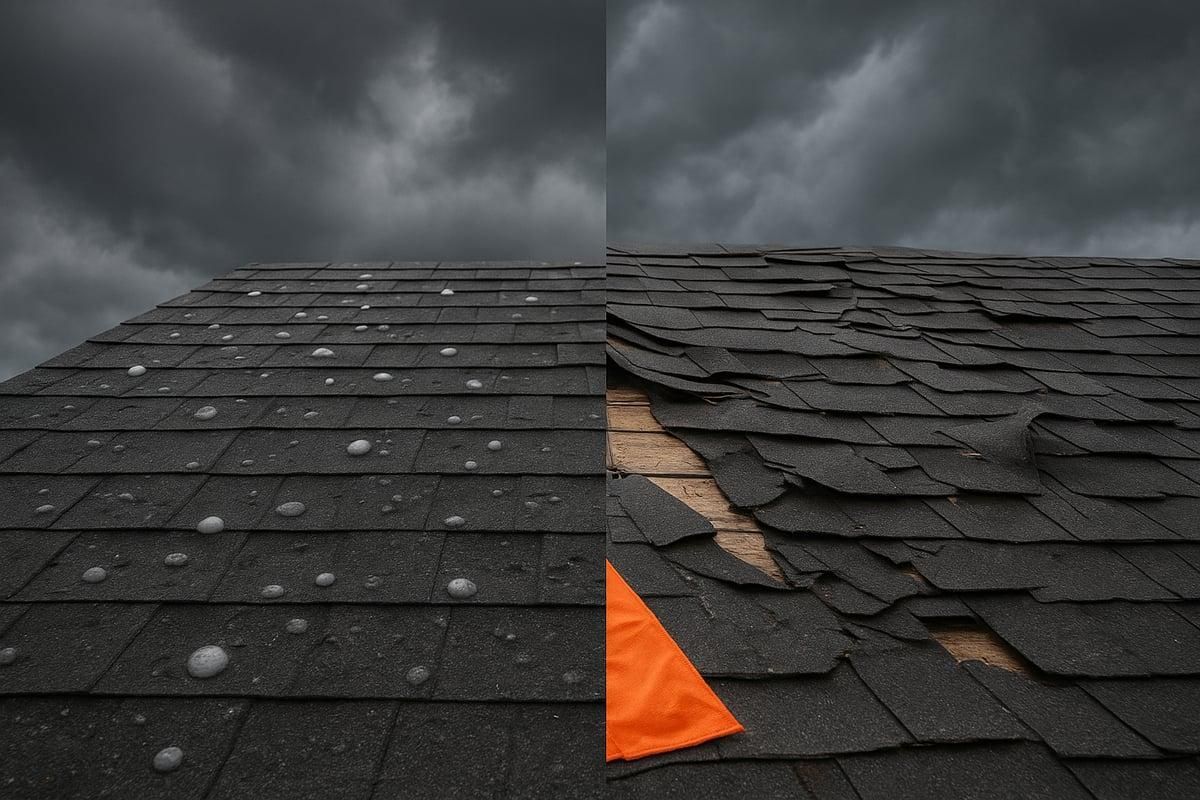
Curling, cracking, or missing shingles across multiple slopes often indicate an aging roof. Repeated repairs may only provide temporary relief.
Pay Attention To The South And West Slopes
In the Sandhills, afternoon sun accelerates roof wear. If south and west slopes deteriorate first, partial replacement may work when remaining sections have years left.
What the Shingles Themselves Are Telling You
Shingles give off clear signals as they wear out. You can read most of them from the ground with a pair of binoculars and a walk around the yard.
Granules In The Gutters
Asphalt shingles are coated with mineral granules that shield the asphalt layer from sunlight. When those granules wash off in quantity, you will see gritty, dark material collecting in the gutters and at the base of the downspouts. A little is normal on a new roof. A lot, combined with bald, shiny patches on the shingles, means the protective layer is failing.
Curling And Cupping
Shingle edges that turn upward (curling) or corners that lift while the center stays flat (cupping) are signs of age and heat exposure. Curled shingles no longer shed water the way they were designed to, and they catch wind easily.
Cracking And Brittleness
Shingles that crack when touched, or that show a web of fine splits across the surface, have lost the oils that kept them flexible. Brittle shingles are hard to repair because they tend to break when a roofer lifts them to slide new ones in.
Blistering And Bare Spots
Bubbles, pits, and areas where the surface looks scuffed or worn through often come from heat and moisture trapped in the shingle. Once the mat is exposed, the shingle is on a countdown.
Dark Streaks, Moss, And Algae
The dark streaks that spread across many Carolina roofs are usually algae, and they are mostly a cosmetic issue on their own. Moss is more serious, because it holds moisture against the shingles and can lift their edges. A roof covered in moss that has been left for years often has underlying wear to match.
Tip: Take photos of your roof from the same spots every spring and fall. Side by side images make slow changes obvious, such as spreading streaks, new curling, or more granules in the gutters, and they give your roofer a clear history to work from.
The Leak Pattern Matters More Than the Leak
A single leak does not mean you need a new roof. A leak is a symptom, and the question is what caused it.
If water is getting in through one identifiable weak spot, such as failed flashing at a chimney, a cracked pipe boot, or a few missing shingles, a repair at that spot usually solves it. These are the most common sources of leaks on roofs that are otherwise in good shape, and fixing them promptly keeps a small problem from spreading.
If leaks keep appearing in different places, or if a repaired area starts leaking again within a season or two, the roof as a whole is no longer shedding water reliably. That pattern is one of the clearest arguments for replacement. It means the shingles and underlayment across the roof are letting go, and patching one spot just moves the pressure to the next.
Pay attention to what happens during wind driven rain too. Roofs in this part of North Carolina often leak only when a storm pushes water sideways, which can mean flashing or edge details have failed rather than the field of the roof. A good inspection separates those cases.
Check What Is Under the Shingles
The shingles are the visible layer, but the deck beneath them is what decides whether repair is even an option.
Roof decking is the plywood or boards the shingles are fastened to. When a leak runs long enough, the deck absorbs moisture and starts to soften. In the attic, look for dark stains on the underside of the deck, damp or compressed insulation, a musty smell, and daylight showing through where it should not. From inside the house, a sagging ceiling, a spreading brown stain, or paint that bubbles and peels can all mean water has been moving through for a while.
If the deck is damp but sound, a repair can often dry it out and protect it. If it is spongy, rotted, or sagging, then the roof needs more than new shingles. Rotted sections have to be cut out and replaced, and when that is needed over a large area, replacing the whole roof system is usually the more sensible path.
Humidity plays a part here as well. A poorly ventilated attic in a Carolina summer traps heat and moisture, cooking the shingles from below and encouraging mold on the deck. If your attic feels like an oven and smells damp, ventilation is part of the conversation, whichever way you go on the roof itself.
When Repairs Start to Pile Up
There is a point where repair stops being the practical choice, even if each individual fix makes sense on its own. You have probably reached it if:
The roof has been patched several times in different spots over the last few years.
New shingles used in a repair stand out because the old ones around them have faded and worn, and the patches have their own seams that wind can catch.
You find yourself checking the ceiling after every storm.
The shingles that surround each repair are too brittle to handle without breaking.
A roof in that state is giving you a series of small problems that will keep coming. Replacing it ends the cycle and gives you a system that works as a whole, instead of a collection of fixes of different ages.
Storm History Counts
Central North Carolina gets its share of severe weather: strong thunderstorms in summer, and tropical storms or hurricane remnants that push wind and heavy rain well inland. A roof that has been through several of these may carry damage you cannot see from the ground, such as creased shingles, broken seals, or bruised areas from hail.
If a storm has just passed, a close look at the roof is worth doing soon, because storm damage that seems minor can turn into a larger failure with the next round of weather. A repair may be all that is needed, particularly on a younger roof. On an older roof that has already been through years of wear, storm damage is often the last straw, and replacement becomes the better choice.
Warning: Do not climb onto the roof yourself to check for damage, especially after rain or a storm. Wet shingles and loose granules are slippery, and weakened sections can give way under your weight. Use binoculars from the ground and leave the close inspection to a professional with the right safety equipment.
Questions to Ask Before You Decide
When you sit down with a roofer, a few questions help you get to a clear answer.
How old is the roof, and how much life do the shingles have left based on their condition today?
Is the damage limited to one area, or is it present on multiple slopes?
What does the deck look like where water has gotten in?
If we repair this now, how long should the repair hold, and what is the likely next problem?
Is the attic ventilated well enough to protect whatever goes on top?
An honest roofer will answer those with specifics, point out the evidence on your roof, and tell you plainly when a repair makes sense. Be cautious about anyone who pushes one answer without showing you why.
Frequently Asked Questions
How long does an asphalt shingle roof usually last in North Carolina?
Asphalt shingles are generally rated for 15 to 30 years, but the hot, humid climate and frequent storms in central North Carolina tend to push roofs toward the shorter end. Ventilation, installation quality, and regular maintenance also change the number.
Can I repair just one section of my roof?
Yes, if the rest of the roof is in good condition. Isolated damage from wind, a fallen limb, or failed flashing can be repaired without replacing everything. If the surrounding shingles are brittle or worn, though, a repair may not hold.
What is the biggest sign a roof needs to be replaced instead of repaired?
Leaks that keep returning in different places, combined with widespread curling, cracking, or granule loss, are the strongest indicators. A soft or rotted deck also points to replacement.
Does a roof leak always mean a new roof?
No. Many leaks come from a single failed detail, such as flashing, a pipe boot, or a few missing shingles. Finding the source is the first step, and a targeted repair often solves it.
Can a roof be repaired after storm damage?
Often, yes. Lifted or missing shingles, damaged flashing, and small punctures can usually be repaired if the damage is limited and the rest of the roof is sound. Widespread storm damage on an older roof may call for replacement.
How can I tell if my roof deck is damaged?
Look in the attic for dark stains, damp insulation, a musty smell, or daylight coming through the deck. Inside the house, a sagging ceiling or spreading stain suggests water has been getting in. A roofer can confirm by checking the deck directly.
Weigh the Evidence Before Choosing Your Roof Path
Repairing and replacing a roof are both reasonable choices, and the right one depends on how old the roof is, how widespread the damage has become, what the leaks are doing, and what shape the deck is in. A younger roof with a contained problem deserves a good repair, while an older roof with scattered failures deserves a fresh start. The goal is to avoid pouring money into patches on a roof that is past its useful life.
For homeowners in Hoke County, NC, Vertex Roofing & Restoration
brings 10
years of hands-on experience to this exact decision. The crew checks the shingles, flashing, and deck, photographs what it finds, and gives you a straight answer about which direction makes sense. That honest, evidence-based approach lets you move forward knowing your money is going where it will actually protect your home through many more Sandhills storm seasons.